From an interrupted childhood to the frontlines of conservation, her journey reflects both personal resolve and a broader national challenge. As human-wildlife conflict intensifies, Maureen’s role becomes emblematic of a shifting landscape, where survival, coexistence, and dignity must be negotiated daily, often in the most sobering circumstances.
When Maureen Mulenga receives a call from her commander, it often signals danger: someone’s life, home or livelihood is at risk.
Maureen lives in Mfuwe in the Luangwa Valley. This small town is known for its natural beauty and wildlife. The bucolic paradise is also the gateway to the famed South Luangwa National Park. But beyond the undeniable beauty lies an ugly reality: when wildlife and communities share space, it can result in injuries, property damage, and even death.
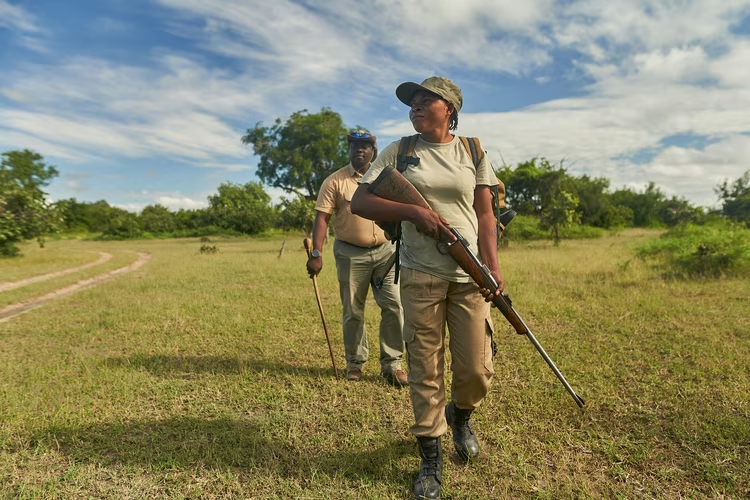
Human-wildlife conflict has been on the rise in Zambia in recent years, exacerbated by increased settlement and farming in wildlife areas, to the point that barely a week passes without reports of clashes. Wildlife rangers and scouts are integral to formulating and implementing solutions to this challenge. This includes scouts such as Maureen Mulenga, who has served her community for more than two decades.
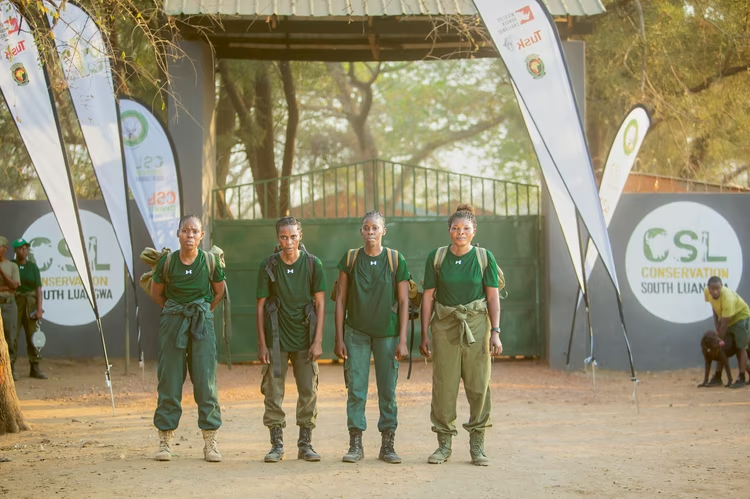
As a member of Conservation South Luangwa’s (CSL) Human-Wildlife Conflict Rapid Response Unit (RRU), a joint initiative between Conservation South Luangwa and the Department of National Parks and Wildlife (DNPW), since 2023, Maureen has been responsible for responding swiftly to incidents. She and her team transport people injured in wild animal confrontations to the nearest medical response centre. When a wildlife attack results in a fatality, her team ensures the body is handled with dignity and transported to a mortuary. It is sobering work.
The unit, the first of its kind in Zambia, was established to provide rapid, round-the-clock support to communities living alongside wildlife and to raise awareness of how to coexist with animals.
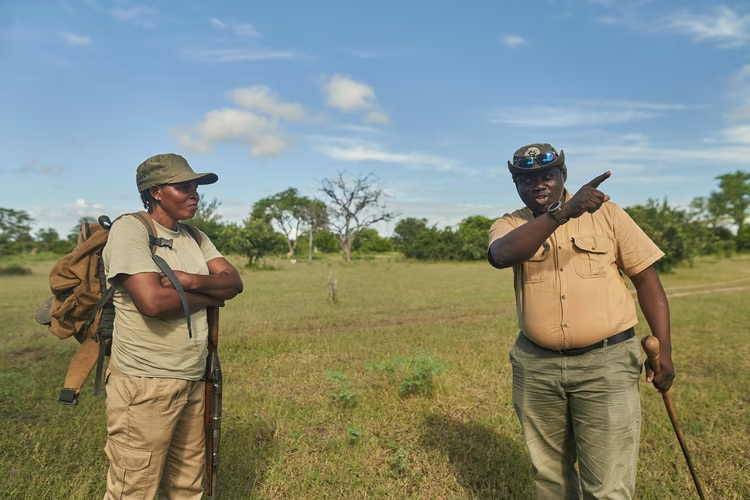
Born in 1984 in Kasama, Maureen never imagined herself as a woman working in conservation, nor as a scout. Her parents divorced when she was four years old, and her mother returned to her hometown of Mfuwe, taking Maureen with her. While she had never considered conservation, since childhood, Maureen had always wanted to play a role in improving her community and had dreamed of becoming a police officer. However, Maureen’s dream came crashing down in Grade 9 when she was forced to leave school due to a lack of funds. Fighting the urge to give up, she explored other options until a chance encounter led to an opportunity to become a scout. The initial three-month training was physically and mentally arduous, but she had made up her mind to serve her community and never considered giving up. Her resilience paid off, and she began as a scout with the Kakumbi Community Resource Board in 2005 before joining CSL in 2013.
Working in conservation gave Maureen a sense of purpose. Poaching was rampant, and the unregulated sale of bushmeat was going unchecked. Maureen saw an opportunity to give back and create win-win situations in which both humans and wildlife could thrive side by side.
A key part of her job in resource protection was spending no fewer than 10 days at a time patrolling the field on foot. The conditions in the field are harsh, and movement is often limited during the rainy season, when streams and rivers swell. Simple activities such as cooking a meal become difficult, which can lead to long stretches of living off dry rations and water. Maureen says this is one of the many realities of life in the field. During the dry season, water becomes scarce, leading to days without basic amenities such as bathing or washing gear. Over her career, Maureen has spent more than 4,000 days on patrol, reflecting her endurance and long-standing commitment to conserving one of Zambia’s most important ecosystems.
Despite the challenges, her work alongside her team remains rewarding. She built a strong reputation for resilience during 16 years on anti-poaching foot patrols, including time as Second-in-Command (2IC). She recalls that one of the most rewarding parts of her early work was making arrests and taking poachers out of the bush.
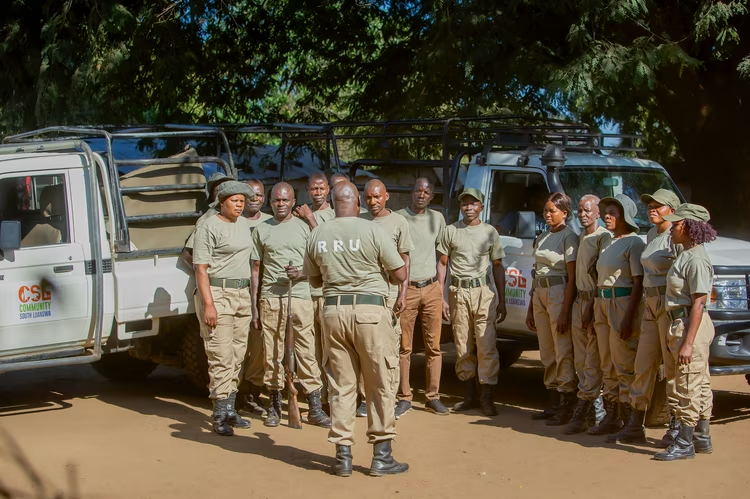
Maureen is known for her ability to respond rapidly to calls and for her optimism. Her colleagues describe her as someone who does not dwell on the challenges that come with her role. This has earned her respect from colleagues and the community. Her steadiness has led to leadership roles and the trust of the people she serves. She is known among her team as calm under pressure, solutions-oriented, and deeply committed to both wildlife protection and community wellbeing. Her ability to defuse tense situations has become one of her most valued strengths.
When transitioning to the Human-Wildlife Conflict RRU in 2023, the same year the unit was expanded to include women, Maureen decided to shift from law enforcement to more direct community engagement within the RRU. Human-wildlife conflict is immediate and deeply personal, with people’s lives and property at risk. While community engagement has gone a long way, misunderstandings still occur. Tempers flare, and scouts can face threats from both animals and the communities they serve.
Since the unit’s formation, its work has contributed to significant results: elephant conflict killings by authorities dropped by 50 per cent in 2023, and by mid-2025, no elephants had been killed in response to conflict since December 2024. Human fatalities linked to wildlife encounters also declined by 75 per cent in 2024. Much of her work takes place at night, often responding to incidents involving elephants. In low visibility, encounters can be unpredictable, requiring constant alertness and trust in her training and team.
A recent incident illustrates this. Maureen and her team arrived on the scene where a child had been attacked by a crocodile after entering crocodile-inhabited waters. Regrettably, the child was already dead by the time the RRU arrived. Understandably, tensions were high, and some community members believed the response team was somehow to blame. Some individuals attempted to attack the team, but they were prevented only by their chief’s intervention, as he explained that the team was there to help and educate. In another incident, a lion killed a community member’s cow, sparking anger and demands for retaliation. Maureen stepped in to calm tensions while guiding a response that protected both the community and wildlife conservation efforts.
Moments like these require courage and diplomacy, and Maureen is well placed to handle them. With decades of anti-poaching work, a strong understanding of wildlife, and as a member of the community herself, she’s able to empathise with people and understand the challenges of living alongside wildlife in rural areas.
While some communities have embraced the RRU’s message and are learning to live safely alongside wildlife, progress is slower in areas where people remain resistant, but the work continues nonetheless.
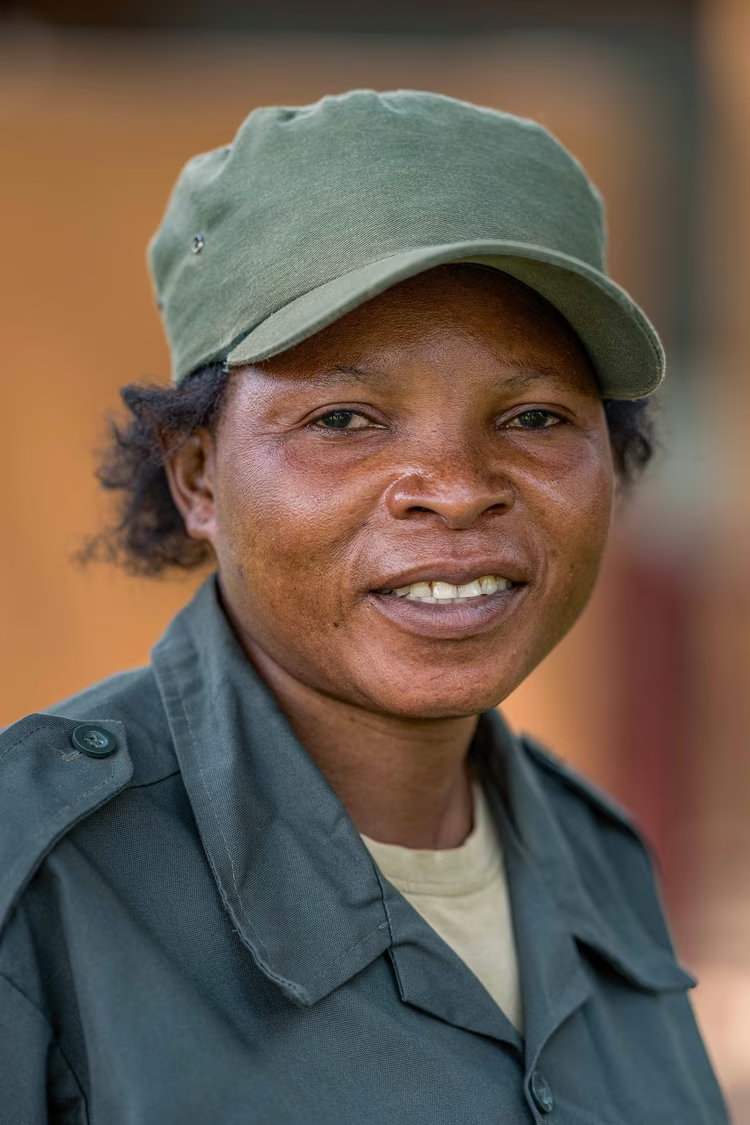
But long before community resistance, Maureen faced opposition from family, friends and community members who did not support her decision to become a scout, fearing for her safety and future prospects. Some of their concerns were valid; she could face retaliation if she worked to curb unregulated bushmeat consumption. She was also warned that she could be killed or even bewitched, mishandle her rifle and endanger herself and those around her. She was told that, with a job in conservation, she would become an aggressive woman who could never get married or have children. Maureen ignored these warnings and has proven them wrong. She’s now a wife and mother to three children, all of whom she and her husband are putting through school. While Maureen was forced to leave school after Grade 9, this is not a concern for her own children.
Spending long stretches away from home, she has developed systems to ensure her family and responsibilities run smoothly when she is away. She also relies on friends and credits her husband with being a supportive and active parent.
Today, she remains resilient and strong, keeping pace with younger recruits and mentoring many who want to follow in her path. In places like Mfuwe, wildlife and humans have no choice but to coexist. Therefore, finding ways to live peacefully alongside one another is essential, and Maureen has worked towards this throughout her 20-year career.
When asked what she wants her legacy to be, she says she simply wants to be remembered as someone who helped communities understand the importance of wildlife and how to coexist with it.