Who Mpezeni IV Really Was
Born David Njengembali Jele in the 1940s, Paramount Chief Mpezeni IV came of age working in a factory in Livingstone before his life changed completely. Following the death of his father in June 1981, Ngoni tradition required a year to pass before a successor could formally assume the throne. The waiting period was observed in accordance with longstanding customs before Njengembaso Jere was installed at Ephendukeni Palace in June 1982.
He was crowned at the age of 31 in a ceremony attended by Ngoni royal figures from across the country and Malawi, as well as Zambia's first President, Dr Kenneth Kaunda. That coronation set the tone for everything that followed. A young man stepping into a dynasty that traced back centuries.
A Lineage That Mattered Across Continents
Mpezeni IV was a direct descendant of Mpezeni I kaZwangendaba, the nineteenth-century Ngoni warrior king who resisted British colonial expansion. As Paramount Chief of the Ngoni people, Mpezeni IV served as the custodian of a royal lineage tracing back to Zwangendaba, the legendary Ngoni warrior-king who led his people from present-day South Africa into Central Africa during the 19th century.
He was the first Mpezeni to return to his ancestral land in South Africa to see exactly where his forefathers came from. It was a statement: these people didn't come from nowhere, and we know it. Many people felt disconnected from their roots in modern Zambia. Mpezeni made sure that didn't happen to his people.
Transforming Ncwala Into a Continental Event
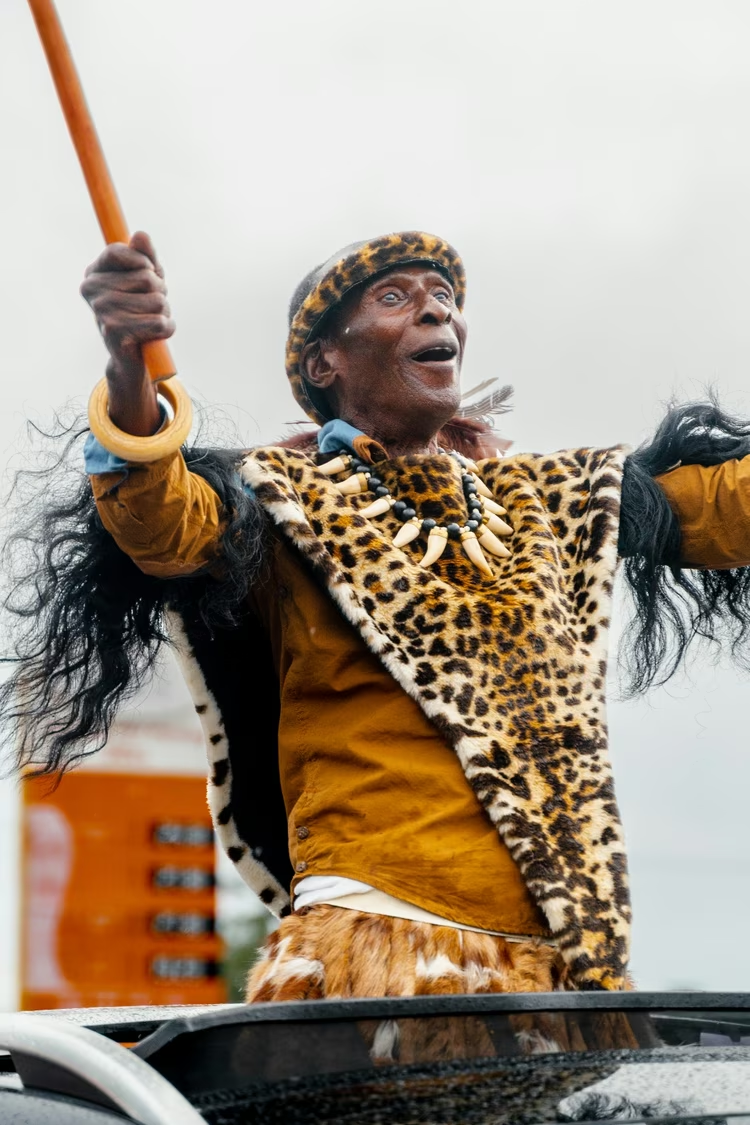
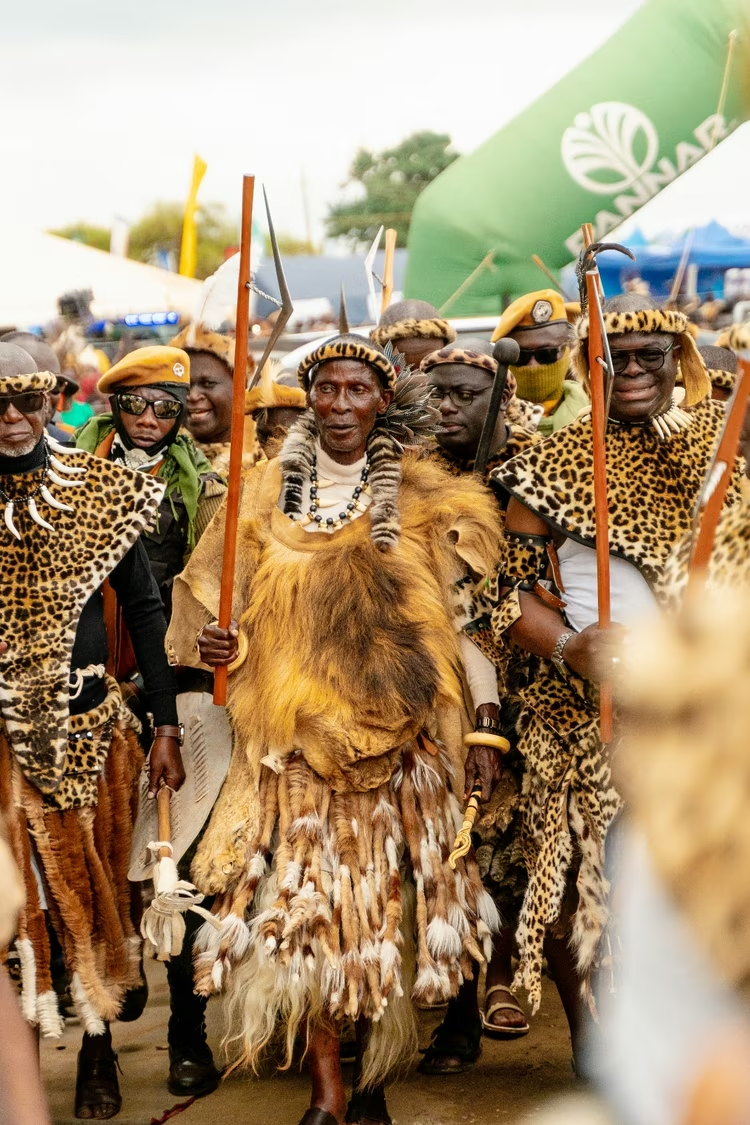
If you know anything about Paramount Chief Mpezeni, you know the Nc'wala. Over the next 44 years, Mpezeni IV transformed the Nc'wala Traditional Ceremony into one of Zambia's most prominent cultural events. What began primarily as a traditional harvest celebration evolved into a nationally recognised ceremony that attracts presidents, diplomats, officials, traditional leaders, and visitors from across Africa and beyond.
Throughout his reign, Mpezeni IV presided over the annual Nc'wala Ceremony in Chipata, which celebrates the first fruits and commemorates the Ngoni migration led by King Zwangendaba from present-day South Africa.
Former South African President Jacob Zuma attended Ncwala ceremonies during his reign. That's the level of respect this chief commanded. The ceremony went from being something locals attended to being something that put the Ngoni kingdom on the map as a serious cultural powerhouse.
Navigating Eight Presidents Without Losing His Authority
Here's what actually impresses people about Mpezeni's 44 years. Throughout his reign, Mpezeni IV maintained influence across successive political administrations. Mpezeni IV served during the administrations of Presidents Kenneth Kaunda, Frederick Chiluba, Levy Mwanawasa, Rupiah Banda, Michael Sata, Edgar Lungu, and Hakainde Hichilema.
Think about that timeline. He lived through multi-party democracy, economic crises, and political upheaval, and he remained relevant.
During his reign, he played a key role in strengthening traditional leadership institutions and remained a prominent voice on matters affecting local communities and national development.
Inkhosi Yamankhosi Mpezeni IV stood as a towering symbol of continuity, wisdom, resilience and cultural pride. His reign transcended generations, political epochs and social transformations, leaving an indelible imprint not only on the Ngoni Kingdom but on the entire Republic of Zambia.
What He'll Be Remembered For
When you strip away the formality, Mpezeni did three things that matter.
First, he kept culture alive during a time when many young people were forgetting where they came from. The Nc'wala was proof that Ngoni identity was worth protecting. It was worth investing in.
Second, he showed that traditional leadership and modern governance didn't have to be at war. He worked with eight different presidents. He advised on local development. He resolved disputes. He wasn't stuck in the past, and he wasn't erased by the present.
Third, he connected the Ngoni people to their wider history. During his reign, he transformed the Ncwala Ceremony into one of Zambia's largest and most prominent traditional ceremonies, attracting thousands of participants, government leaders, diplomats, and visitors from across Africa. He maintained strong cultural links with Ngoni communities in Malawi, Mozambique, Tanzania and South Africa and was noted as the first Mpezeni ruler to return to the ancestral homeland of the Ngoni in South Africa.
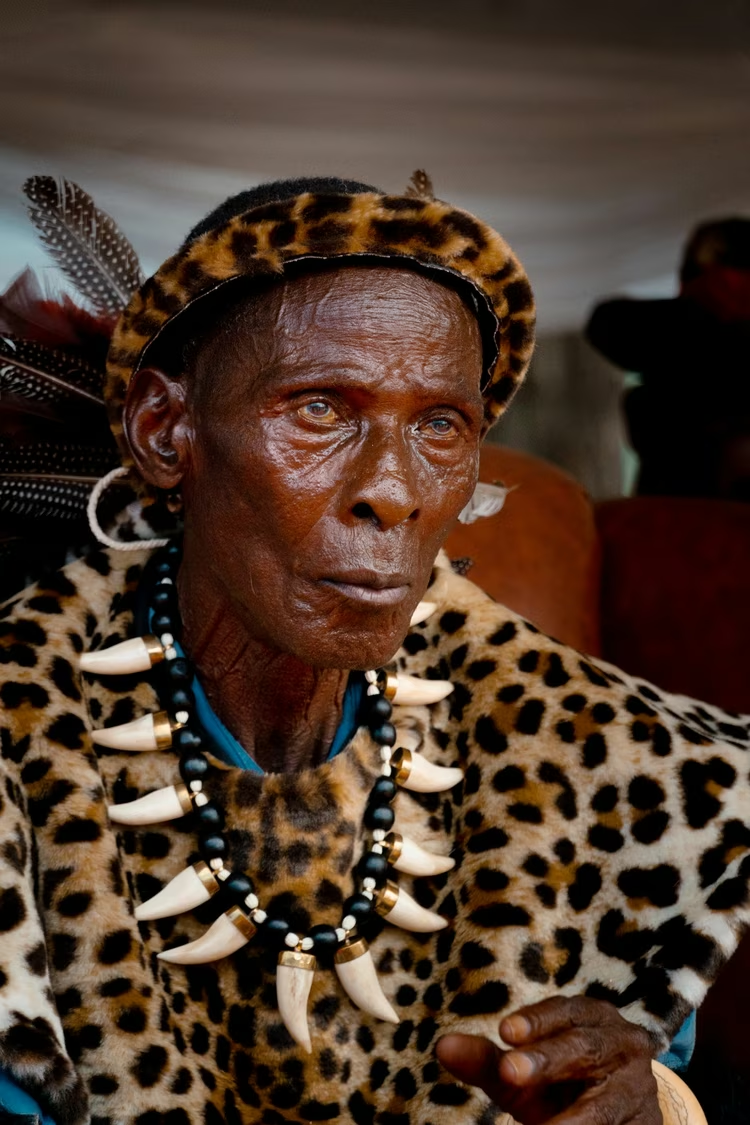
In a world where migration, urbanisation, and globalisation break communities apart, Mpezeni made sure the Ngoni stayed connected to their own story.
How the Ngoni Bury Their Kings
Senior Chief Nzamane says Paramount Chief Mpezeni was a baptised Catholic and that the Royal Establishment would like him to be accorded a funeral service by the Catholic Church. The request reflects the late chief's personal faith and the establishment's desire to honour his spiritual convictions.
The burial is happening on two levels. The Ngoni Royal Establishment has announced that the late Paramount Chief Mpezeni will be laid to rest on June 9, 2026. His body is expected to arrive in Chipata on Thursday, June 4, ahead of the funeral and burial ceremonies. Chipata will host thousands of mourners.
But here's where Ngoni tradition gets specific, and it's important to understand what's happening. Early Ngoni oral accounts record that a king "never died alone." Enslaved attendants were sometimes killed and buried with the ruler, and a prominent warrior or noble would be designated to accompany him as a symbolic "pillow" in the afterlife.
That practice doesn't happen anymore, but it tells you something about how the Ngoni saw royal death not as the end of a life, but as a transition.
In accordance with Ngoni culture and customs, Senior Chief Nzamane is the official spokesperson on all matters relating to the funeral and the Ngoni Kingdom. Coverage of the King's funeral processions will be restricted in accordance with Ngoni traditions.
Only accredited media houses will be permitted to take photographs at designated points. This is about controlling how sacred things are treated. The Ngoni know what respect looks like.
What Happens to the Throne?
No Ngoni should begin discussing or giving interviews regarding the succession to the Mpezeni throne. It is considered an abomination for any Ngoni to discuss succession before Mpezeni IV is laid to rest in accordance with the Ngoni tradition and funeral rites.
The Ngoni are a patrilineal society. Succession follows the male line, unlike matrilineal groups such as the Chewa and Bemba, where heirs are determined through the mother's lineage.
Mpezeni left behind a wife, one child (a daughter), and grandchildren. None of that changes the succession line. The throne doesn't go sideways or backwards. It follows the male bloodline.
How Long Does Succession Take?
Look back at Mpezeni's own coronation. Following the death of his father in June 1981, Ngoni tradition required a year to pass before a successor could formally assume the throne. The waiting period was observed in accordance with longstanding customs before Njengembaso Jere was installed at Ephendukeni Palace in June 1982.
The funeral happens within days. The mourning continues for a full year. During that year, the Ngoni community does things in a specific way; there are restrictions and rituals. And at the end of that year, installation happens.
The next Paramount Chief won't sit on the throne at Ephendukeni Palace until approximately June 2027. That's a year of waiting, just like Mpezeni waited 44 years ago.
What This Means for the Ngoni Going Forward
The death of Paramount Chief Mpezeni IV closes one of Zambia's longest chapters of traditional leadership. After ruling the Ngoni people for more than four decades, the traditional leader leaves behind a wife, one child and grandchildren. Many described him as humble, approachable and deeply loved. "Ncwala will never be the same again," many Zambians have said, struggling to come to terms with the loss.
But the Ngoni system doesn't fall apart when a king dies.